The Three Phases of Post-Construction Cleaning
Post-construction cleaning is not a single task — it is a structured, multi-phase process that transforms a job site into a finished space ready for occupancy. Whether the project is a new commercial building in Portland, a tenant improvement in Eugene, or a renovation in Salem, the cleaning process follows the same three-phase framework.
Each phase builds on the previous one, and skipping phases leads to poor results and potential damage to new finishes. General contractors in Oregon typically specify post-construction cleaning in project specifications, and the cleaning standard directly affects certificate of occupancy inspections and client acceptance.
Phase 1: Rough Clean
The rough clean happens while construction is still ongoing, typically after framing, mechanical, electrical, and plumbing rough-ins are complete but before drywall finishing or final finishes are installed.
Rough Clean Tasks
- Remove all large debris, scrap lumber, packaging materials, and discarded construction waste
- Sweep all floors to remove dust, nails, screws, and construction debris
- Remove adhesive labels and protective film from windows and fixtures
- Wipe down HVAC ductwork before registers and grilles are installed
- Clean interior of cabinets and closets before doors are hung
- Vacuum all rough openings and window tracks
The rough clean is primarily about debris removal and making the space safe and accessible for finish trades (painters, flooring installers, tile setters) to do their work. It does not need to be spotless — that comes in Phase 2.
Phase 2: Final Clean
The final clean is the most labor-intensive phase and occurs after all construction is complete, all fixtures are installed, and all finish work is done. This clean brings the space to a move-in ready standard.
Final Clean Checklist
- Walls and ceilings — Wipe down all painted surfaces to remove drywall dust. Clean scuff marks and paint splatters from trim and door frames.
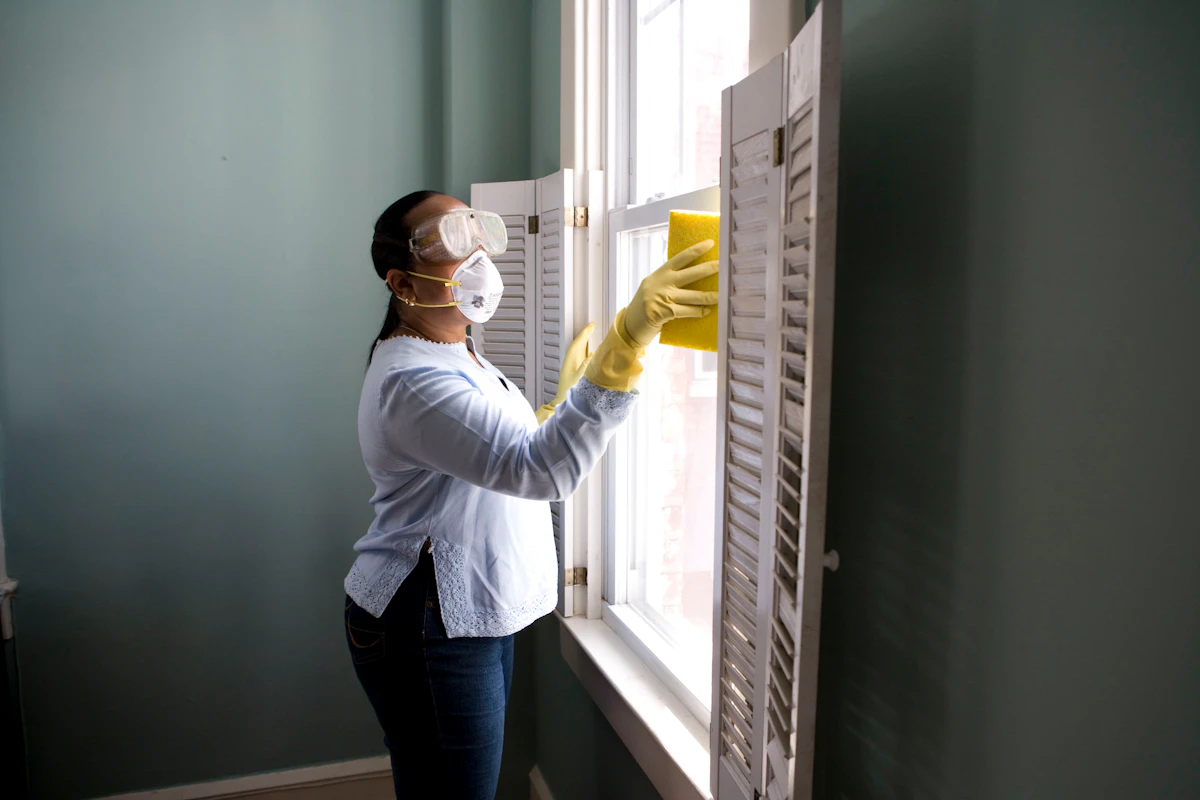
- Windows — Clean all interior and exterior glass. Remove paint overspray, stickers, and adhesive residue. Clean tracks, sills, and frames.
- Floors — Vacuum all carpet. Mop all hard floors with appropriate cleaner. Remove grout haze from tile. Clean hardwood floors with manufacturer-recommended products.
- Restrooms — Scrub and disinfect all fixtures. Clean mirrors. Remove construction dust from all surfaces. Polish chrome fixtures.
- Kitchen and break room — Clean all appliances inside and out. Wipe down all cabinets and countertops. Clean sink and fixtures.
- Light fixtures — Remove dust and fingerprints from all light fixtures, covers, and lenses.
- Hardware — Wipe down all door handles, cabinet pulls, outlet covers, and switch plates.
- HVAC — Clean all registers, grilles, and return air vents. Replace construction filters with permanent filters.
For tile floors and walls, grout haze removal is one of the most time-consuming tasks. Our tile and grout cleaning guide covers the best methods and products for this specific challenge.
Phase 3: Touch-Up and Punch List Clean
After the final clean, a walkthrough with the general contractor or building owner identifies any areas that need additional attention. This is the punch list clean.
- Address any items flagged during the walkthrough
- Re-clean windows that were touched by tradespeople after the final clean
- Spot clean floors where equipment was moved during the punch list
- Remove fingerprints from new fixtures and surfaces
- Final dust of all horizontal surfaces
- Verify all trash is removed and dumpsters are cleared from the site
The touch-up clean is often quick — an hour or two for a commercial space — but it ensures the project is delivered at the highest standard. Do not skip this phase, as first impressions at final walkthrough affect client satisfaction and payment.
Specialty Surface Cleaning
New construction introduces surfaces that require specific cleaning techniques to avoid damage.
- Natural stone (granite, marble, quartz) — Use only pH-neutral stone cleaner. Acidic products etch natural stone permanently. Remove grout residue carefully with stone-safe grout haze remover.
- Stainless steel — Clean with stainless steel cleaner and wipe in the direction of the grain. Construction dust scratches stainless easily — use soft cloths only.
- New carpet — Vacuum thoroughly in multiple directions to remove loose fibers from manufacturing. Do not use carpet cleaning chemicals on new carpet for at least 30 days.
- Polished concrete — Use pH-neutral cleaner only. No acidic, alkaline, or abrasive products. Our commercial cleaning guide covers surface-specific maintenance.
- Glass partitions and storefronts — Use professional glass cleaner and squeegee technique. Remove any silicone smears with razor blade at a 45-degree angle.
Safety Hazards During Post-Construction Cleaning
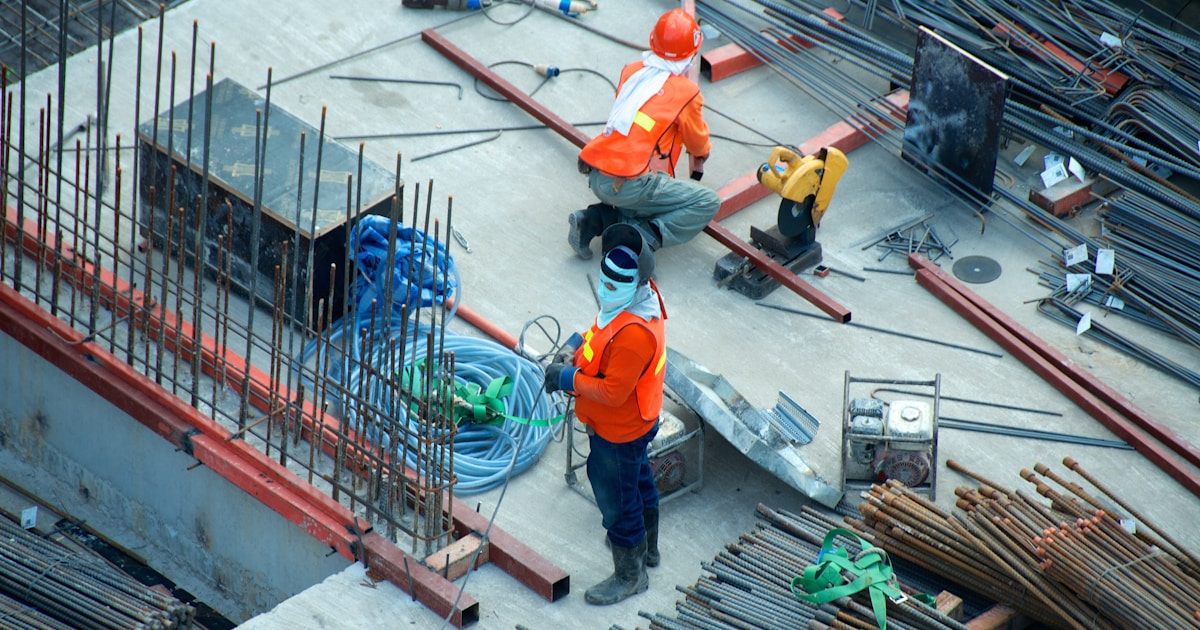
Construction sites present unique hazards that standard commercial cleaners may not encounter. Oregon OSHA requires awareness and mitigation of these risks.
- Silica dust — Drywall sanding, concrete cutting, and tile work generate respirable crystalline silica. OSHA's silica standard (29 CFR 1926.1153) limits exposure and may require respiratory protection during heavy dust cleanup.
- Sharp objects — Nails, screws, staples, and metal shavings are common on construction floors. Wear puncture-resistant footwear and heavy gloves.
- Chemical residues — Adhesives, solvents, sealers, and paint products may be present on surfaces. Check Safety Data Sheets and ventilate spaces before extensive cleaning.
- Elevated work — Cleaning high windows, light fixtures, and HVAC vents may require ladders or lifts. Follow OSHA fall protection standards.
- Unfinished areas — Some spaces may have missing covers on electrical panels, unguarded edges, or incomplete railings. Identify and avoid these hazards.
Hiring a Post-Construction Cleaning Service
Post-construction cleaning is specialized work that general janitorial companies may not be equipped to handle. When hiring a post-construction cleaning service in Oregon, look for:
- Experience with commercial construction projects, not just residential renovations
- OSHA training documentation for staff, including silica awareness and fall protection
- Commercial-grade equipment including HEPA vacuums, scissor lifts, and floor machines
- Workers compensation and general liability insurance with limits appropriate for construction sites
- References from general contractors, not just homeowners
- Understanding of the three-phase cleaning process and willingness to coordinate with the GC's schedule
Post-construction cleaning in Oregon is typically priced at $0.15 to $0.75 per square foot for all three phases, depending on the complexity of finishes and the condition of the space after construction. See our post-renovation cleaning guide for more on what to expect. For pricing details, check our pricing page.
Frequently Asked Questions
Who is responsible for post-construction cleaning?
The general contractor typically includes post-construction cleaning in the project budget, either as a line item performed by their crew or subcontracted to a cleaning company. The cleaning specification is usually found in Division 01 (General Requirements) of the project specifications. Building owners should verify the cleaning scope in their contract.
How long does post-construction cleaning take?
A rough estimate is 1 to 3 hours per 1,000 square feet for the final clean, depending on the number of windows, complexity of finishes, and overall site condition. A 10,000 square foot commercial space typically requires a crew of 3 to 5 people for one to two full days for all three phases.
Can I do post-construction cleaning myself?
Small residential renovations (single room, bathroom remodel) can be cleaned by homeowners with household equipment. Commercial projects and large renovations require commercial equipment (HEPA vacuums, floor machines, lifts) and knowledge of specialty surface care. Incorrect cleaning products can permanently damage new finishes and void warranties.
What is the biggest mistake in post-construction cleaning?
Using the wrong products on new surfaces. Acidic cleaners on natural stone, harsh chemicals on hardwood, abrasive pads on stainless steel — these mistakes are expensive to fix and often impossible to reverse. Always identify the surface material and use manufacturer-recommended products.